Torre del Oro, Seville: History, What to See, and Visiting Tips
The Torre del Oro is one of Seville’s most iconic monuments and one of the city’s most recognisable symbols, alongside the Giralda and Plaza de España. Situated on the banks of the Guadalquivir River, this defensive tower has witnessed centuries of history and is a must-visit for any traveller.
In this guide, we’ll explore the history of the Torre del Oro, what to see during your visit, and practical tips to make the most of your experience.
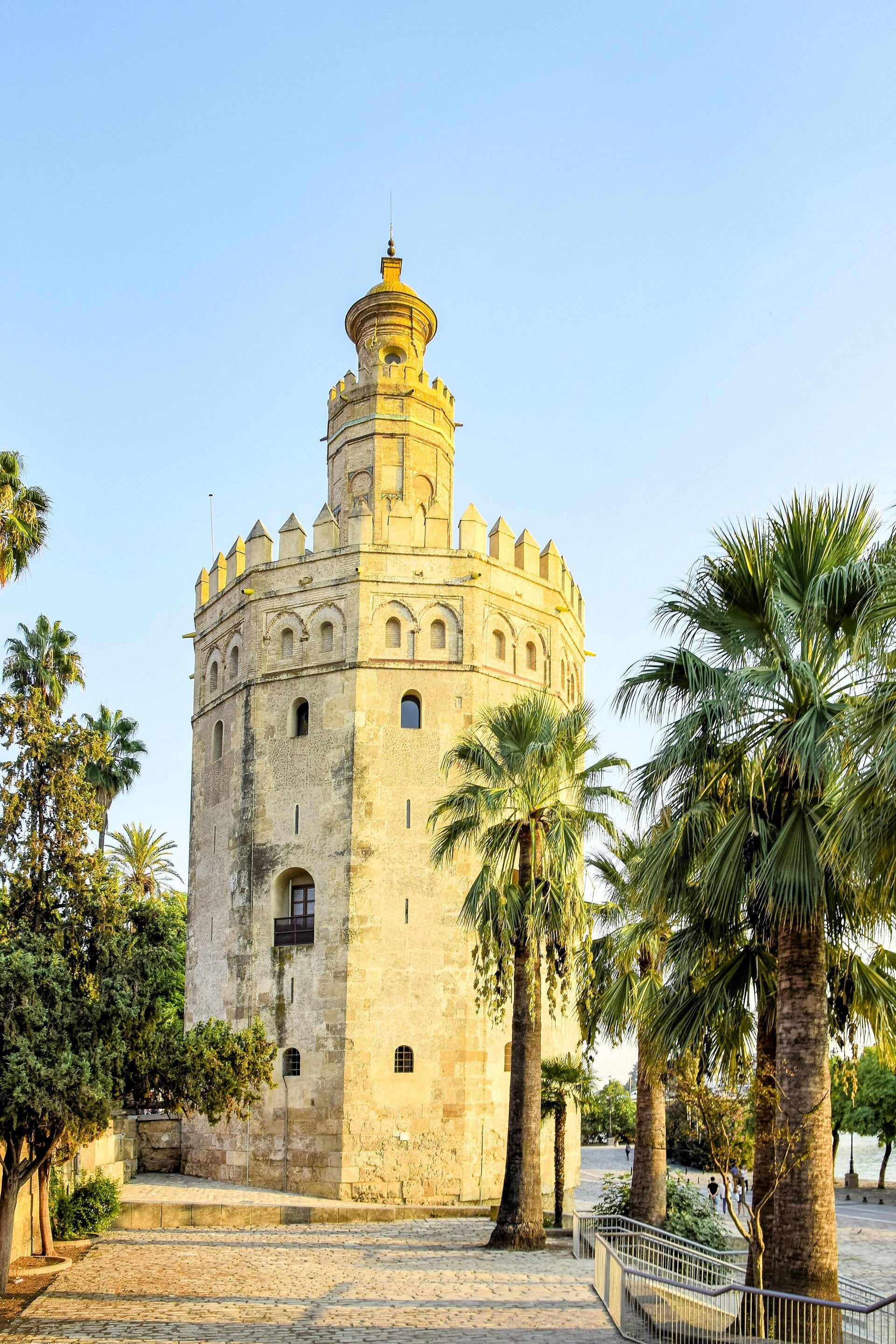
History of the Torre del Oro
The Torre del Oro was built in the 13th century, around 1220, during the Almohad period. Its original purpose was defensive, forming part of the city walls and controlling access along the Guadalquivir River.
One of its most fascinating functions was controlling river traffic: a large chain stretched from the Torre del Oro to another tower in Triana, preventing enemy ships from passing.
The tower’s name has inspired many theories. The most popular is that it comes from the golden shine reflected on the river by the building materials, although it has also been linked to storing precious metals from the Americas.
Over the centuries, the Torre del Oro has served various purposes, including:
-
Defensive tower
-
Chapel
-
Prison
-
Warehouse
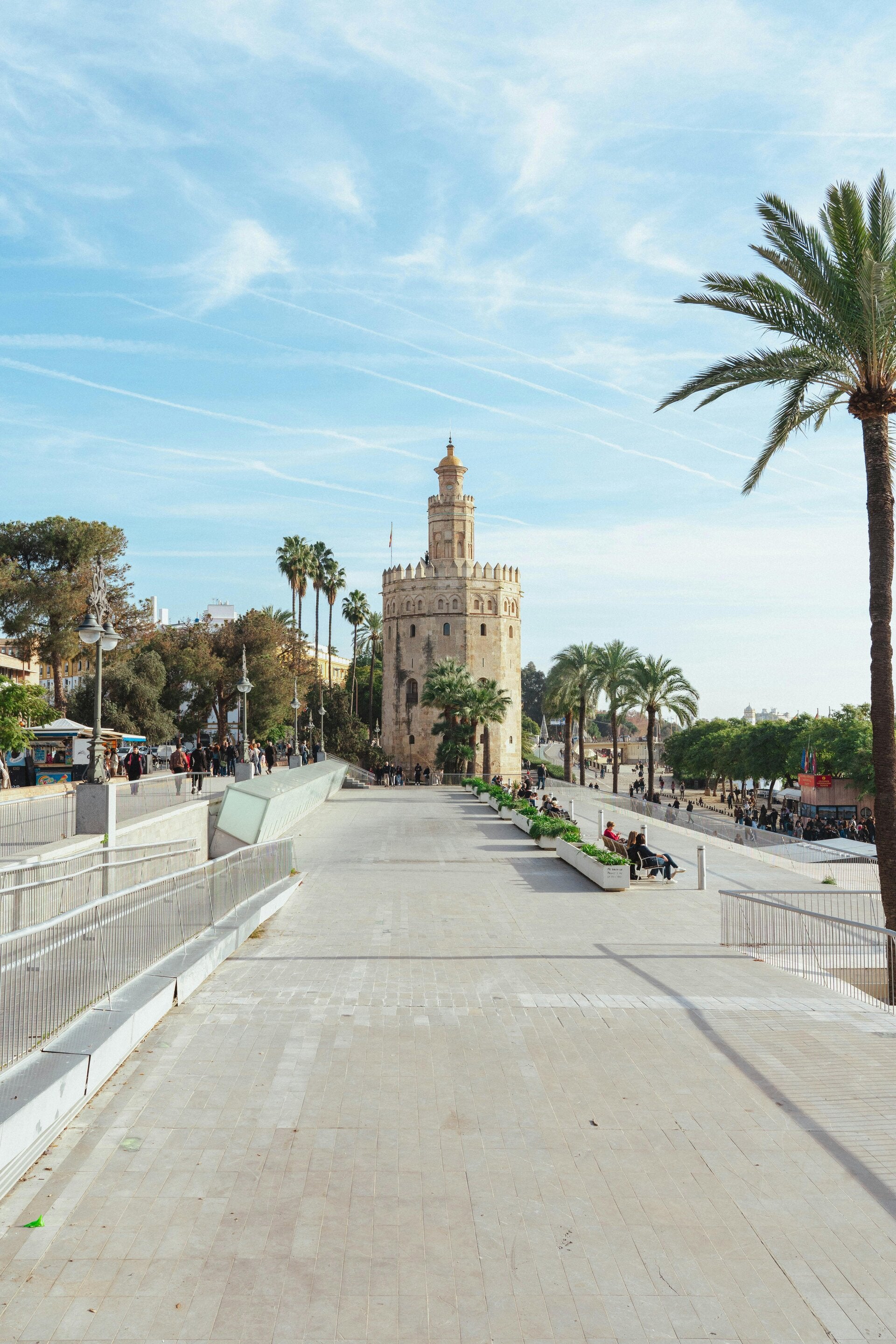
Where is the Torre del Oro?
The Torre del Oro is located on Paseo de Cristóbal Colón, next to the Guadalquivir River, close to the Arenal neighbourhood and just a few minutes’ walk from Seville’s historic centre.
It’s a lovely area to stroll, especially at sunset, and is surrounded by other points of interest, such as:
-
Plaza de Toros de la Maestranza
-
Triana Bridge
-
Santa Cruz Quarter

Practical Information for Visiting
Opening hours may vary depending on the time of year, but generally:
-
Monday to Friday: morning and afternoon
-
Saturday: morning only
-
Sundays and public holidays: closed
Entry fee: very affordable (usually just a few euros)
Tip: Check the latest opening times before your visit, especially on holidays.